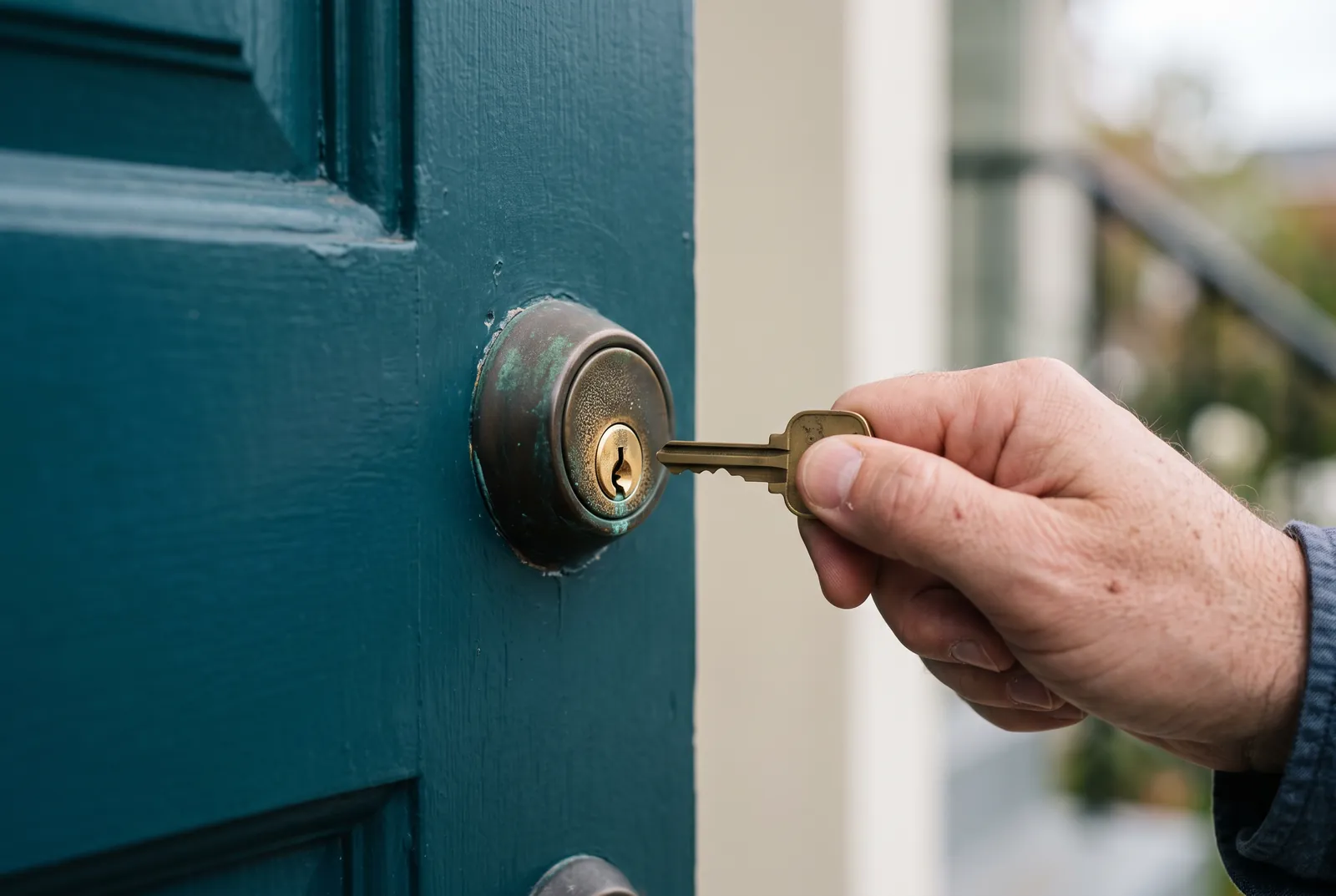
What the fog is carrying
From the bluff above the Palisades the open ocean is about a mile off, and the wind that comes over that ridge has been picking things up off the water the whole way in. It is not only water vapor. Marine air carries chloride in it, the fog lays it down on everything it touches, and unlike rain it does not rinse anything off afterward.
That is why a lock on this side of the hill can look dry and still be corroding. It never needs to get wet. A keyway is a narrow slot open to the air on one side, with steel springs and steel pins sitting in a brass housing a few millimeters in, which is close to a laboratory setup for the problem.
It reaches further inland than people expect. The ocean-facing streets take the worst of it, but a garage anywhere in the city is vented, so a garage-level door two miles from the water still gets the same air moving past it all night.
What it does inside the cylinder
The springs go first. They are the finest steel in the lock, they are under load every time a key goes in, and a spring that has lost a fraction of its section no longer pushes its pin down cleanly. That single change is what makes a key feel gritty rather than smooth.
The pins pit next. A pin is meant to be a polished cylinder sliding in a polished chamber, and pitting turns it into something that catches at the shear line. Then the plug itself: brass turning inside brass with steel sitting against both, in a damp slot, which sets up exactly the kind of couple that eats the softer metal.
The symptoms arrive in a fixed order and it is worth knowing where you are on it. The key needs a small wiggle. Then it needs to be pulled back a hair before it will turn. Then it needs a real push with the thumb. Then it snaps, which has its own guide on this site because the first thirty seconds after that decide what the repair costs.
The three things people try, in order of how much worse they make it
Graphite. On a dry lock in a dry town it is fine. In a keyway that already has salt film in it, graphite powder binds into a gray paste that packs the pin chambers and holds moisture against the springs. We take more locks apart to wash graphite out of them than for any other single reason.
Household oil and the aerosol water-displacers. They free the lock for about a fortnight because they are solvents, and then the carrier evaporates and leaves a film that collects the fine grit blowing around outside. The lock comes back stiffer than it was, with the grit now stuck to the pins.
Force. A brass key that is a copy of a copy, turned hard against a plug that is binding, is a key about to break. Every snapped key we pull out of a cylinder in this city had a week or two of warning before it went, and in almost every case somebody had leaned on it that morning.
What actually helps
A proper flush. The cylinder is cleaned out with a solvent made for locks, blown dry, and then given a dry lubricant — PTFE or a lock-specific product that leaves nothing sticky behind. Wet lubricant plus coastal grit is the arrangement you are trying to get away from.
A fresh key cut from the best original you own, not from the worn one in your pocket. Each copy drifts a little from the one before it, and after five generations the cuts no longer lift the pins to the right heights. Pair a drifted key with a stiff cylinder and you have a lock that only opens for one person in the household, who has learned the trick without noticing.
And the door itself. A leaf that has dropped makes the bolt bind against the strike, the key takes that load, and everybody blames the cylinder. Long hinge screws and a re-cut strike pocket are part of a visit here rather than something bought, and they end a surprising share of stiff-key calls on their own.
The real answer is the finish, not the can
Hardware finishes have numbers. BHMA 626 is satin chrome plated over brass and it is what goes into most builder orders because it is cheap and it looks right indoors. It is an interior finish. BHMA 630 is satin stainless steel, it costs a little more, and it is what an exterior door within sight of the water is supposed to wear.
On the ocean side of town — the Palisades, the streets on the ridge, anything facing the wind — the difference between 626 and 630 on an outside door is roughly the difference between replacing it every five years and forgetting about it for fifteen. Lock replacement and installation runs $125 to $329, and asking for 630 costs a few dollars inside that range rather than adding to it.
Where the hardware is still sound, the honest answer is smaller: a rekey at $29 to $46 a cylinder with a clean-out and a fresh key, and a note in the diary to do it again in a few years. Nobody needs new locks because a key feels rough. They need the salt taken out and the key re-cut.
Which locks on the property get it worst
The gate latch and any padlock hanging in the open air, because they have no shelter at all and a padlock's shackle spring is thinner than anything in a door. The garage side door, because the garage breathes. The door at the top of the outside steps on a west-facing house, which takes wind straight off the ridge.
And the car. Door locks and boot cylinders on a car parked outside every night on these streets stiffen the same way, which is why so many people here stopped using the key in the door years ago and now find out it is seized on the day the fob battery dies. Fob programming is $95 to $199 and a mechanical key cut and tested is a fraction of a lockout at $105 to $199.
Quick answers
Is graphite bad for a lock near the coast?+
In this air, yes. Graphite powder and salt film combine into a paste that packs the pin chambers and holds damp against the springs. A cylinder is better washed out with a lock solvent and given a dry PTFE lubricant afterward.
What finish should an outside door have here?+
BHMA 630, satin stainless. The common builder finish is 626, satin chrome over brass, which is made for interior doors. The upgrade sits inside the $125 to $329 range for a replacement rather than on top of it.
My key only turns if I lift the door. Is that the salt?+
Usually not. That is the leaf sitting low on its hinges so the bolt meets the edge of the strike instead of the middle of it. Long screws into the framing and a re-cut strike pocket fix it, and both are part of the visit.
Need it handled rather than read about?
(650) 977-1855