What arrived with the keys
Between listing and closing a house on these streets is opened by two agents, a stager and the crew who carried the furniture in and out, a photographer, a general inspector, a contractor pricing a bathroom, a gardener, and everyone who walked through an open house on a Sunday. The lock box came off the door on the last day. Whether every key that existed came back with it is not a question anyone was tracking.
None of that is alarming and none of it is anybody's fault. It is bookkeeping, and the first month is when you do it. The median sale here is somewhere around $1.11 million, the market moves quickly, and the cylinder on the front door is frequently sixty or seventy years old, which means it has either been rekeyed several times or never once.
Do it in the week you close rather than the week you move in. The house is empty, every door is clear, nothing has to be lifted out of the way, and the whole list gets done in one stop with the $89 call-out counted once.
First: the roll-up door, which no rekey touches
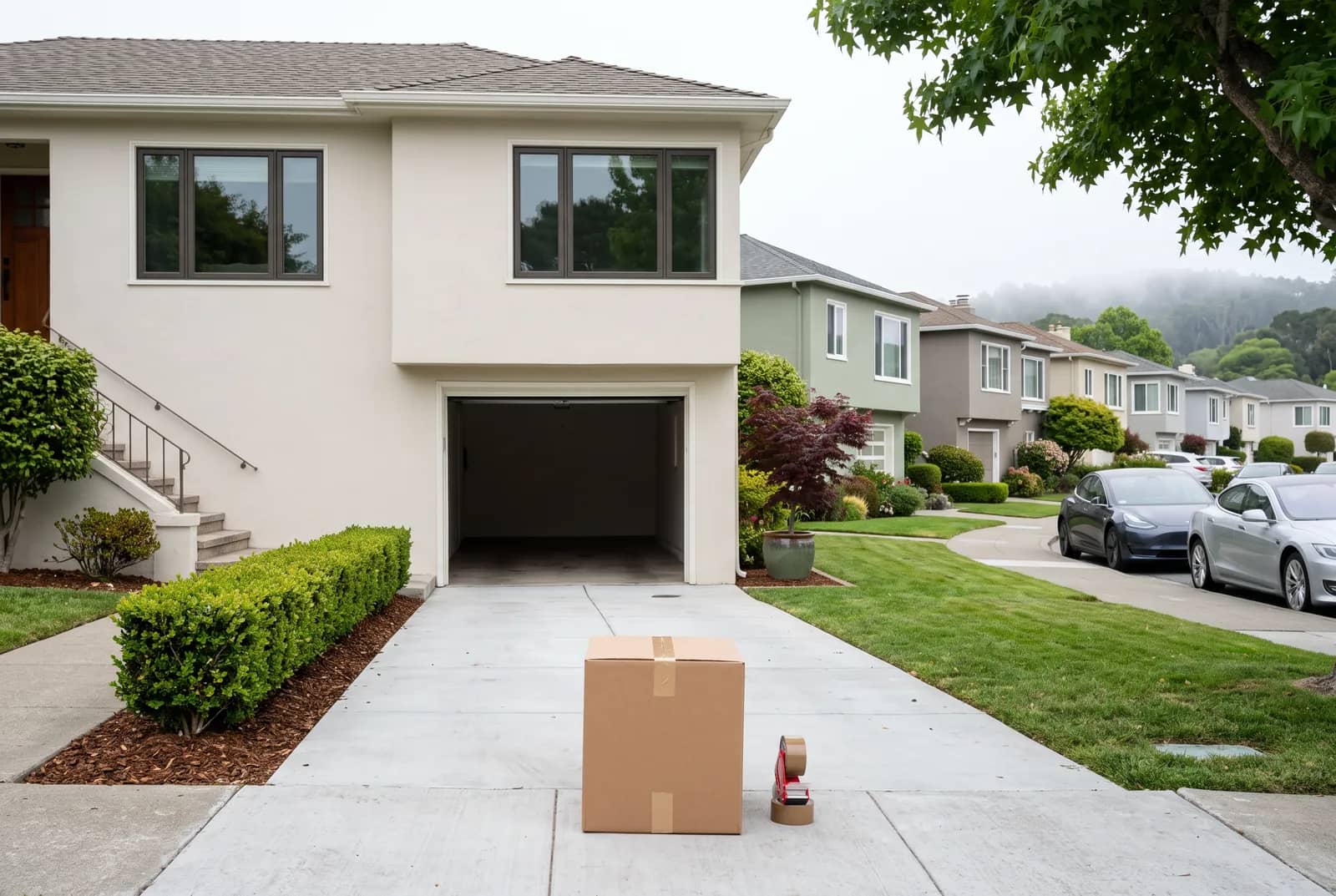
Start with the biggest opening on the property, because it is free. Almost every opener made in the last thirty years has a learn button on the motor head. Hold it until the light goes out and every remote the unit has ever known is forgotten, including the one clipped to the visor of a car the previous owners sold.
Then pair only the remotes you can physically hold, and set a new code on the keypad if there is one on the jamb outside. Two minutes, no parts, and it deals with the one set of openers that no locksmith visit would ever have retired.
Second: the door at the back of the garage
This is the door you will use for everything from now on, so look at it properly before you decide anything else. On a house of this plan it is very often wearing a passage knob or a plain keyed knob with no deadbolt above it, which is how the tract was built and not something the seller did.
If there is only a latch on it, that is the first purchase: a deadbolt fitted, $125 to $329, with the bolt landing in a strike pocket cut deep enough to take its full inch and long screws through the jamb into framing. Ask for the stainless finish. The garage is vented and the air coming through it has been over the ocean.
Third: the front door at the top of the steps
It is used the least and weathered the most, and its cylinder is the one most likely to be the original from the 1950s. Rekey it anyway at $29 to $46, because it is the door whose keys have been handed around the most during the sale.
Cut two keys, not one, and test them standing outside with the door shut rather than on the workbench. A key that turns on the bench and binds on the door has not been tested. If it needs a lift or a shoulder, the leaf has dropped and it gets put right in the same visit.
Fourth and fifth: the back door, the gate, the shed
Walk the property with a notepad and count cylinders rather than doors. A front knob and a deadbolt above it is one door and two cylinders. Add the garage door at the back, the door to the yard, a gate latch, a shed, a padlock on the crawl space hatch. Most houses here come to four or five, some to seven.
Write down the maker's name stamped around each keyhole while you count. That is what decides whether they can all go onto one key or whether one cylinder has to be swapped for a different family first, and it is the difference between a job quoted at the low end of the range and one quoted at the top.
If the house was let at some point before you bought it — and a good many on these streets were — the count matters more, not less. You are not being told a story about who had keys. You are simply closing the list.
Sixth: the locks that are not doors
The mailbox, which frequently comes with one worn key and no spare, and which is the lock people notice last and need soonest. The meter cupboard. The padlock on the crawl space hatch, which will have seized in this air if nobody has opened it for a few years. A storage cage, if you bought one of the flats above the shopping streets.
None of these are urgent and all of them are cheap while somebody is already at the property with a key machine in the van. They become expensive as a separate call-out six months later.
What the month actually costs
Free: clearing the opener memory, the two tests on each door, and writing down who holds which key. Paid: rekeying at $29 to $46 a cylinder with one $89 call-out for the whole stop, a deadbolt where there is only a latch at $125 to $329, and — only after the door itself has been made right — a keypad at $189 to $479 if you want one.
The order matters more than the total. A motor cannot lift a door that has dropped, so a smart lock fitted on top of a leaf that needs a shoulder will report a jam, retry, and eat a set of batteries every two months. Doors first, then locks, then anything with a battery in it. Ninety days on the workmanship either way, written on the receipt.
Quick answers
We just closed. Does the hardware have to go, or is a rekey enough?+
A rekey is enough unless the hardware has actually failed. New pins retire every key handed out during the sale at $29 to $46 a cylinder, against $125 to $329 for hardware you did not need. Anyone quoting new locks purely to give you a new key is selling hardware.
How many cylinders does a house on these streets have?+
Usually four or five. The front knob and the deadbolt above it, the door at the back of the garage, the door to the yard, and a gate or shed. Some reach seven with a crawl space padlock and a mailbox. One $89 call-out covers the stop whatever the number.
Is it worth doing before we move in?+
It is the cheapest week to do it. The house is empty, every door is clear and the whole list is one stop. It also retires the keys that mattered most, which are the ones handed out while there was no furniture in the house.
Need it handled rather than read about?
(650) 977-1855